
When You Actually Need a Business Litigation Lawyer (And When You Probably Don't)
- The Spencer Law Firm
- Feb 1
- 21 min read
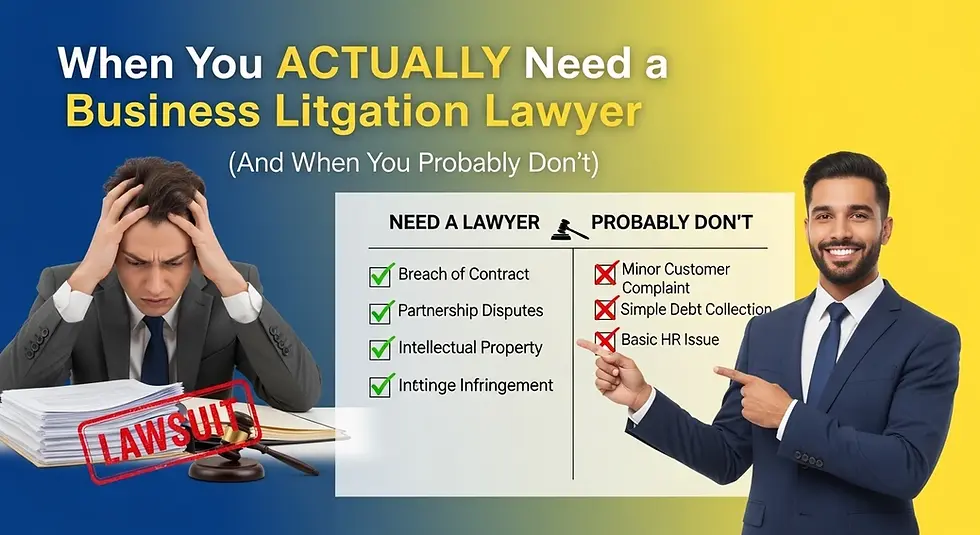
You know that moment when you realize a business relationship has broken down completely? Maybe it's a contract dispute with a vendor who didn't deliver what they promised, or a partnership that's gone sideways, or a client refusing to pay for work you've already completed. There's this specific feeling that comes with it, kind of a mixture of frustration and dread, because you know things are about to get complicated. Most business owners I've seen in this situation didn't expect it to go this far.
They thought they could handle it with a few phone calls or emails. But somewhere along the way, those conversations stopped being productive, and now they're staring at the possibility of actual litigation. That's usually when they start looking for a business litigation lawyer, though honestly, that's often later than it should be.
The thing about business disputes is that they escalate in ways you don't always see coming, and by the time you're thinking about lawyers, you're already dealing with damaged relationships, lost revenue, and a situation that's going to cost more to fix than it would have to prevent.
What makes this article different is that it's not just about what happens once you're already in a lawsuit. Most discussions about business litigation focus on courtroom strategy or settlement tactics, which matter, but that's basically the emergency room approach. What I'm more interested in explaining here is how business litigation actually works in practice, what the early warning signs look like, and how having the right legal guidance early, way before things blow up, can fundamentally change the outcome. This is about understanding the landscape well enough to make smarter decisions, whether that means avoiding litigation entirely, positioning yourself better if it becomes necessary, or knowing when walking away makes more sense than fighting.

Business Litigation Lawyer: When Contracts Become Courtroom Battles
Business litigation is essentially what happens when companies or business owners can't resolve a dispute on their own and need the legal system to step in. It covers a pretty wide range of conflicts, from breach of contract claims to partnership disputes, shareholder disagreements, intellectual property fights, fraud allegations, and employment-related lawsuits that don't fall under straightforward labor law.
The common thread is that these are commercial disputes, matters that affect how businesses operate, make money, and fulfill their obligations to others. A business litigation lawyer handles these cases from the initial consultation all the way through trial if necessary, though most cases, maybe 90% or more, settle before they ever see a courtroom. That said, the possibility of trial shapes everything about how these disputes get handled.
Here's what the process typically looks like:
Initial case assessment: where the lawyer reviews your situation, documents, and potential claims or defenses
Pre-litigation negotiation: attempting to resolve the matter without filing a lawsuit
Filing or responding to a complaint if negotiations fail, formally starting the litigation process
Discovery phase: where both sides exchange documents, take depositions, and gather evidence
Motion practice: where lawyers argue legal issues before trial, sometimes getting parts of the case dismissed
Settlement discussions: which can happen at any point but often intensify as trial approaches
Trial preparation and courtroom proceedings: if the case doesn't settle
The reason business litigation works the way it does comes down to how commercial disputes differ from other legal matters. In a business context, there are usually written agreements, documented communications, financial records, and multiple parties with their own interests. The court system recognizes that these disputes can shut down operations, destroy business relationships, and cost significant money, so there's a structured process designed to encourage resolution while also providing a path to a binding decision if needed. Judges in business courts, particularly in places like Houston's commercial dockets, tend to have experience with these matters and understand the practical realities of running a business.
They know that sometimes what looks like a legal dispute is really about cash flow, timing, or market conditions.
I worked with a small manufacturing company a few years back that got into a dispute with their largest customer over a purchase order. The customer claimed the products didn't meet specifications and refused to pay about $180,000. The manufacturer insisted they'd delivered exactly what was ordered. Both sides had some documentation supporting their position, but neither had been particularly careful about the change order process, so there was ambiguity.
We spent about three months in discovery, going through emails, specifications, quality control records, and depositions of the people involved. What became clear was that both sides had changed expectations midstream without formalizing anything in writing. The case eventually settled for about 60% of the invoice amount, which neither side loved, but both recognized that going to trial would have cost nearly that much in legal fees alone, with no guarantee of a better outcome. That's actually pretty typical of how business litigation plays out.

Commercial Disputes: The Hidden Costs Beyond Legal Fees
When business owners start thinking about litigation costs, they usually focus on attorney fees, which makes sense because those are visible and often substantial. But the real cost of business litigation goes way beyond what you pay your lawyer. There's the time investment, first of all. If you're the owner or a key executive, you're going to spend hours, maybe dozens of hours, dealing with the case.
That means time away from actually running your business, developing new products, serving customers, or managing employees. You'll be sitting in deposition prep sessions, reviewing documents your lawyer needs you to identify, attending court hearings, and having strategy discussions. All of that pulls you away from revenue-generating activities.
The less obvious costs that tend to surprise people include:
Opportunity cost from deals you can't pursue because capital is tied up in the dispute
Relationship damage with customers, vendors, or partners who learn about the litigation
Employee distraction as your team gets pulled into depositions or document searches
Reputational impact, particularly if the case becomes public or involves allegations of wrongdoing
Emotional and mental stress that affects decision-making across your entire business
Insurance implications, including potential premium increases or coverage disputes
These indirect costs can actually exceed the direct legal expenses, particularly for smaller businesses where the owner's time and attention are critical to operations. I've seen companies lose key opportunities because the owner was too focused on litigation to notice a market shift or a competitor's move. There's also this tendency for litigation to become all-consuming. You start thinking about it constantly, checking for updates from your lawyer, strategizing about the next move. It's mentally exhausting in ways that aren't always obvious at the beginning.
What makes this particularly challenging is that once litigation starts, you're kind of locked in. You can't just decide to stop participating because you're tired of it. If you're the defendant, ignoring the case means a default judgment against you. If you're the plaintiff, dropping the case usually means giving up your claims entirely. So the decision to litigate needs to account for all these factors, not just whether you're "right" in some abstract sense.
A business litigation lawyer who's worth working with will help you think through these realities before filing or responding to a lawsuit, making sure you understand what you're really getting into.
Choosing the Right Legal Strategy: When to Fight and When to Settle
The decision about how to handle a business dispute is rarely black and white. In theory, if you're completely in the right and the other side is clearly wrong, you should fight and win. In practice, it's more complicated. Even strong cases have risks. Witnesses forget details or come across poorly in depositions. Documents that seemed clear when you first read them can be interpreted differently by opposing counsel or a judge. Juries, when cases get to trial, can be unpredictable, especially in business matters where technical details or industry practices might not make sense to people outside your field.
Why This Gets Complicated Faster Than People Expect
One thing business owners tend to underestimate is how quickly a dispute can escalate once lawyers get involved. Not because lawyers are inherently combative, though some are, but because the act of hiring an attorney signals that you're serious. It changes the dynamic. What might have been an uncomfortable conversation between business associates becomes a formal legal matter with positions, counterclaims, and discovery.
Discovery, if you're not familiar, is the process where both sides exchange information and documents. It's necessary for building a case, but it's also time-consuming and expensive. You're gathering emails, contracts, and financial records, sometimes sitting for depositions where you're questioned under oath about the dispute. For a small business owner who's already stretched thin, this can be genuinely disruptive.
And here's what catches people off guard: once litigation starts, you often can't just decide to stop it unilaterally. If someone files a lawsuit against you, you don't get to ignore it. You have to respond, even if you think the claims are baseless. You're in the system now, and there are deadlines and procedures and consequences for not following them.
This is why experienced business litigation lawyers will often tell you that avoiding litigation is better than winning litigation. Winning still costs money, time, and emotional energy. It still pulls you away from actually running your business. So if there's a way to resolve the dispute before it gets to court—mediation, negotiation, even a structured conversation with lawyers present—that's usually worth exploring.
But, and this is important, there are times when litigation is absolutely the right call. When someone is clearly in the wrong and won't budge. When you need a court to enforce a judgment. When the principle of the matter is significant enough that you can't let it go without undermining your business. Those situations exist, and trying to avoid them out of fear or frugality can actually cost you more in the long run.
Use Aggressive Litigation When:
The amount at stake justifies the cost and risk, typically when the dispute involves significant revenue or assets
You have very strong documentation supporting your position, like clear contract language or undisputed communications
The relationship with the other party is already destroyed, and there's no future business value to preserve
A settlement would set a bad precedent that encourages similar disputes with other parties
The other side is clearly acting in bad faith or engaging in fraudulent behavior that needs to be formally addressed
Use Settlement-Focused Negotiation When:
The costs of litigation would approach or exceed the amount in dispute, making it economically irrational to fight
There's ambiguity in the facts or documents that creates a meaningful risk of losing at trial
You have an ongoing business relationship that could be preserved or at least not made worse
Quick resolution allows you to move forward with other time-sensitive business opportunities
The emotional and operational drain of prolonged litigation would significantly harm your business
Use Early Mediation When:
Both parties are reasonable and might find common ground with a neutral third party facilitating
The dispute involves subjective issues like quality, performance, or interpretation, where compromise makes sense
You want to control the outcome rather than leaving it to a judge or jury
Preserving confidentiality matters, since mediation is private while court proceedings are generally public
Use Strategic Pre-Litigation Positioning When:
You anticipate a dispute but haven't been sued yet, giving you time to organize documentation and develop a strategy
You want to demonstrate strength before formal litigation to encourage better settlement offers
You're dealing with a sophisticated opponent who will respect well-prepared legal groundwork
The key thing to understand is that these aren't mutually exclusive paths. You might start with aggressive litigation to demonstrate seriousness, then shift to settlement discussions once you've completed discovery and both sides better understand their risks. Or you might begin with mediation, and only file a lawsuit if those talks break down. A good business litigation lawyer will help you adapt the strategy as the situation evolves, not lock you into a single approach from day one.

The Psychology of Business Disputes: Why Smart People Make Bad Legal Decisions
There's something about business conflicts that brings out decision-making patterns you wouldn't see in other contexts. I've watched incredibly rational business owners, people who carefully analyze every investment and operational decision, make completely emotional choices when it comes to litigation. Part of it is the personal element. When someone breaches a contract with you or makes allegations you know are false, it feels like a personal attack, even when it's really just business.
That emotional response can cloud judgment in ways that end up being really costly.
The most common psychological trap I see is what you might call the "sunk cost" problem. A business owner invests months trying to resolve a dispute informally, maybe spending some money on legal consultations or attempting mediation. When those efforts fail, there's this feeling that you've already invested so much that you need to see it through to vindication. So they keep pouring money and time into litigation, even when the rational analysis says it doesn't make economic sense anymore.
The initial investment, which is already gone regardless of what you do next, starts driving future decisions. I've had to talk clients through this more than once, basically saying, "I understand you've already spent $30,000 on this, but spending another $50,000 to maybe get a judgment you can't easily collect doesn't change that first $30,000."
Another pattern is what I'd call the "principle problem." A business owner will say something like, "It's not about the money, it's the principle of the thing." And look, I understand that sentiment. If someone has genuinely wronged you, there's a natural desire to have that acknowledged and corrected. But principles are expensive to litigate. The court system doesn't really care about principles in the way people mean it. Courts care about what the contract says, what the law requires, and what can be proven with evidence.
Fighting for principle alone, when the economic reality doesn't support it, usually means you're going to spend significantly more than you could recover, which is fine if you go into it with eyes open. Still, often people don't really calculate that cost until they're too deep to back out comfortably.
There's also a tendency to overestimate your chances of winning. Most people think their case is stronger than it actually is because they know their own side of the story intimately, but only understand the other side's position superficially. You remember every commitment the other party made and every way they fell short, but you might not remember the context that explains their actions or the ways your own company didn't fully perform either.
A business litigation lawyer who's doing their job will give you a realistic assessment, not just tell you what you want to hear. That assessment might be something like, "I think we have maybe a 60-40 chance of winning on the main claim, but their counterclaim has some merit, so even if we win, we might not recover as much as you're hoping." Those are the conversations that help business owners make better decisions.
When Business Litigation Fails: Understanding the Limitations
Business litigation isn't always the answer, and recognizing when it's likely to fail can save you a lot of money and frustration. The most obvious limitation is when you're dealing with a defendant who doesn't have assets to pay a judgment. You might have an absolutely airtight case, win a complete victory at trial, get a judgment for $200,000, and then discover the defendant has basically nothing you can collect against. Maybe they've shut down their business, moved assets into protected entities, or don't have the resources to pay. At that point, you've won in name only. This is why one of the first questions a good business litigation lawyer will ask is about the defendant's financial situation and collectability.
Common situations where business litigation doesn't work well:
Judgment-proof defendants with no collectible assets or income
Disputes involving small amounts where legal fees would exceed any possible recovery
Cases requiring specialized industry knowledge that judges and juries won't easily understand
Situations with destroyed or missing documentation make proof difficult or impossible
Conflicts where the main goal is a future business relationship that litigation would destroy
International disputes where jurisdiction and enforcement create massive complications
Another limitation comes from the pace of the court system. Business disputes often involve situations where timing really matters. You need a quick resolution because you have a project deadline, or a deal that depends on clearing up the conflict, or cash flow pressure that requires immediate payment. The court system, particularly in busy jurisdictions, doesn't move at the speed of business. It might take 18-24 months to get to trial, even longer if there are appeals. In the meantime, your business problem continues to fester.
Alternative dispute resolution methods like arbitration can be faster, but they have their own costs and limitations.
There's also the public nature of court proceedings to consider. Once you file a lawsuit, those documents become public records. Anyone can read your complaint, the response, the evidence submitted, and ultimately the court's decision. If you're dealing with a dispute that involves proprietary business information, trade secrets, or just facts that might damage your reputation if publicly known, litigation might expose more than it resolves. You can sometimes get protective orders or seal certain documents, but that's not guaranteed, and even the existence of the lawsuit itself becomes public knowledge.
I worked on a case where the client had a legitimate claim against a former business partner who'd basically looted the company before leaving. We had good evidence, strong legal theories, and a sympathetic fact pattern. But as we dug into it, we discovered the former partner had moved everything into his spouse's name, set up trusts for his kids, and was living off income that didn't show up as collectible assets. We could have proceeded, spent $75,000 or more getting to trial, probably won, and then collected maybe $10,000 over several years of post-judgment collection efforts. The client decided to walk away, which was the right call, but it was frustrating for everyone involved. Sometimes the system just doesn't provide a practical remedy, even when there's been a clear wrong.

My Approach to Business Disputes: Building Protection Before Problems Arise
The way I've come to think about business litigation over time is that it's actually the last resort in a much longer process of protecting business interests. The clients who end up in the best position when disputes arise are the ones who built solid foundations before anything went wrong. That means having clear contracts that spell out expectations, performance standards, payment terms, and dispute resolution procedures. It means documenting communications and decisions, especially when things start to go sideways. It means understanding your legal obligations and the other party's obligations well enough to recognize when someone is headed toward breach before it becomes irreversible.
When I take on a new business client, I generally recommend that they think about legal protection in layers:
Contract foundation with clear, well-drafted agreements for all significant business relationships
Documentation practices that create a reliable record of communications and decisions
Early warning systems, like regular contract compliance reviews and relationship check-ins
Response protocols, so you know how to handle disputes when they first emerge
Established legal relationships with a business litigation lawyer you can call immediately when issues arise
Insurance coverage that might cover certain types of disputes or at least the legal fees
The reality is that most business disputes could have been avoided or minimized with better preparation on the front end. I'm not saying every dispute is preventable, because people can act unpredictably or in bad faith regardless of how careful you are. But a lot of litigation stems from ambiguous contracts, unaddressed small problems that grew into major conflicts, or simple miscommunication that hardened into entrenched positions. Having a lawyer review your contracts before you sign them, or helping you respond to the first sign of trouble, costs a fraction of what litigation costs later.
For small business owners, particularly in Houston, where there's a very active commercial environment, this kind of preventive approach makes especially good sense. You're competing with larger companies that have in-house legal teams and sophisticated risk management. You need to be just as thoughtful about protecting your interests, even if you're doing it with outside counsel rather than dedicated staff. That might mean a quarterly call with your business litigation lawyer to review any potential issues, or having them on standby when you're negotiating a significant contract.
It's an investment, but it's usually a much smaller investment than dealing with full-blown litigation after the fact.
The Relationship Between Business Structure and Litigation Risk
One thing that doesn't get discussed enough in general business advice is how your company's legal structure affects litigation risk and outcomes. If you're operating as a sole proprietorship or general partnership, your personal assets are generally at risk in business disputes. A judgment against the business is a judgment against you personally. That means your house, personal bank accounts, and other assets could potentially be reached to satisfy a business debt or judgment.
For small business owners, this is sometimes the reality that makes litigation existentially threatening, not just operationally difficult.
The Part Nobody Tells You
Here's something that doesn't get discussed much: litigation is emotionally draining in ways that have nothing to do with the legal issues. Disputes with business partners, former employees, or longtime clients often involve feelings of betrayal or frustration. You're dealing with the stress of the legal process while also trying to run your business and manage everything else in your life.
A good business litigation attorney understands this and acts as a buffer. They absorb some of the emotional weight, handle the day-to-day confrontations, and give you space to focus on what you do best. That psychological aspect of representation is less tangible than legal strategy, but it's just as important.
The other thing is that litigation outcomes are rarely perfect. Even when you "win," you might not recover everything you were hoping for. Settlement agreements involve compromise by definition. This doesn't mean litigation is pointless, but going in with realistic expectations about what success looks like makes the process easier to handle.
Forming an LLC or corporation creates what's called limited liability, which in theory separates your personal assets from business liabilities. The key phrase there is "in theory," because there are lots of ways that protection can be lost. If you mix personal and business funds, don't maintain proper corporate formalities, or personally guarantee business obligations, a court might "pierce the corporate veil" and hold you personally liable anyway.
Business litigation lawyers see this fairly often, actually. A business owner thinks they're protected by their LLC, but they've been treating the LLC bank account like a personal piggy bank or never had formal meetings or proper documentation, so when litigation happens, the opposing side argues the LLC is basically just an alter ego of the owner.
The business structure also affects how disputes get resolved. If you have partners or multiple shareholders, internal disputes about how to handle litigation can be just as complicated as the underlying business conflict. You might want to settle, but your partner wants to fight. Or you want to invest in aggressive litigation, but your co-owners are worried about the cost.
Having clear operating agreements or shareholder agreements that address how these decisions get made is really important, but a lot of businesses, especially smaller ones, don't have these documents in place or haven't looked at them since formation.
For businesses in Houston specifically, Texas law provides some particular protections and procedures around business entities that can affect litigation strategy. Texas has strong protections for limited liability entities when they're properly maintained. There are also specific statutes addressing things like derivative lawsuits, oppressed minority shareholders, and partnership disputes that create different procedural paths depending on your business structure.
An experienced business litigation lawyer familiar with Texas law can use these provisions strategically, either to protect your interests or to create leverage in settlement discussions.
Moving Forward: Making Decisions When the Path Isn't Clear
I think the hardest part of business litigation for most people is operating in uncertainty. You want to know whether you'll win or lose, how much it will cost, how long it will take. But those answers aren't really available upfront. You can get estimates and probabilities, but ultimately you're making decisions with incomplete information and accepting some level of risk. That's uncomfortable, especially when significant money or the future of your business is at stake.
The way I've seen business owners navigate this most effectively is by staying flexible in their thinking and regularly reassessing whether the current strategy still makes sense. Just because you filed a lawsuit doesn't mean you have to see it through to trial if better options emerge. Just because you initially thought settlement was the right path doesn't mean you can't shift to more aggressive litigation if the other side isn't negotiating reasonably. The key is maintaining enough perspective to recognize when your approach isn't working and needs to change.
It also helps to separate the legal strategy from the business strategy. Your lawyer is focused on winning the legal case or achieving the best legal outcome. But you need to be thinking about what's best for your business overall. Sometimes those align perfectly. Sometimes they don't. A legal victory that takes two years and costs $200,000 might not be a business victory if it means you missed market opportunities or lost key employees who got tired of the distraction. Being clear with your business litigation lawyer about your actual business goals, not just your legal goals, helps them give you advice that's genuinely useful rather than just technically correct.
There's something valuable in recognizing that most business relationships that end up in litigation were once productive partnerships or agreements. Something changed, whether that was circumstances, expectations, or behavior. Understanding what changed and why can sometimes open paths to resolution that pure legal analysis wouldn't reveal. Maybe the other side is acting aggressively because they're under financial pressure you don't know about. Maybe what seems like bad faith is actually miscommunication or different assumptions about what was agreed. Not every dispute can be resolved this way, but I've seen supposedly intractable conflicts settle once both sides better understood where the other was coming from.

Frequently Asked Questions
How much does a business litigation lawyer typically cost?
Most business litigation lawyers work on an hourly basis, with rates ranging from $250 to $600+ per hour depending on experience and location. In Houston, you'll typically find experienced business litigators in the $300-450/hour range. Some cases involve flat fees for specific services, and a small percentage might be handled on contingency if you're the plaintiff with a strong claim. Expect to pay a retainer upfront, usually $5,000 to $25,000, which gets drawn down as work is performed.
Should I hire a business litigation lawyer before a lawsuit is filed?
Absolutely. The best time to consult with a business litigation lawyer is when you first recognize a potential dispute, well before any lawsuit gets filed. Early involvement allows the lawyer to help you preserve evidence, strengthen your legal position, and potentially resolve the matter without litigation. Once a lawsuit is filed, your options become more limited and costs typically increase significantly. Pre-litigation consultation is much less expensive than defending or pursuing a lawsuit.
How long does business litigation typically take?
Most business litigation cases take 12-24 months from filing to resolution if they settle before trial, which the majority do. Cases that go to trial can take 18-36 months or longer, particularly if there are appeals afterward. The timeline depends on court schedules, complexity of the issues, number of parties involved, and how aggressively both sides litigate. Some courts in Houston have faster commercial dockets that can move cases more quickly.
What's the difference between litigation and arbitration?
Litigation happens in court with a judge and potentially a jury, following formal procedural rules and creating a public record. Arbitration is a private process where a neutral arbitrator (or panel) hears both sides and makes a binding decision. Arbitration can be faster and less expensive, but you give up certain rights like the ability to appeal. Many business contracts include arbitration clauses that require disputes to be arbitrated rather than litigated in court.
Can I handle a business dispute without a lawyer?
Technically yes, but it's rarely advisable. Business litigation involves complex procedures, evidentiary rules, and legal strategies that non-lawyers typically don't understand well enough to navigate effectively. Representing yourself, called appearing "pro se," puts you at a significant disadvantage against represented opponents. Even if the amount at stake seems small, the procedural mistakes you might make could cost more than hiring a lawyer would have, or result in losing a case you should have won.
What should I look for when choosing a business litigation lawyer?
Look for experience specifically in business litigation, not just general litigation experience. Ask about cases similar to yours and the outcomes they achieved. Check their familiarity with your industry if it's specialized. Consider their communication style and whether they explain things clearly. Verify they're licensed in your jurisdiction and check their standing with the state bar. Ask about their approach to settlement versus trial. Most importantly, make sure you feel comfortable with them, since you'll be working closely together through what's likely to be a stressful process.
The Part Nobody Tells You
Here's something that doesn't get discussed much: litigation is emotionally draining in ways that have nothing to do with the legal issues. Disputes with business partners, former employees, or longtime clients often involve feelings of betrayal or frustration. You're dealing with the stress of the legal process while also trying to run your business and manage everything else in your life.
A good business litigation attorney understands this and acts as a buffer. They absorb some of the emotional weight, handle the day-to-day confrontations, and give you space to focus on what you do best. That psychological aspect of representation is less tangible than legal strategy, but it's just as important.
The other thing is that litigation outcomes are rarely perfect. Even when you "win," you might not recover everything you were hoping for. Settlement agreements involve compromise by definition. This doesn't mean litigation is pointless, but going in with realistic expectations about what success looks like makes the process easier to handle.
Where You Go from Here
If you're reading this because you're dealing with a business dispute right now, or you're worried one might be developing, the next step is pretty straightforward. Talk to a business litigation lawyer. Not necessarily to file a lawsuit or even to hire them immediately, but to get an informed perspective on what you're dealing with and what your options are.
Most attorneys offer initial consultations where you can explain the situation and get their preliminary assessment. Use that conversation to understand both the legal landscape and whether this particular attorney is someone you want representing you.
And if you're reading this more generally, just to understand the landscape, the main takeaway is probably this: prevention is cheaper than cure. Having solid contracts, documenting agreements clearly, and addressing problems early when they're still small—these habits won't eliminate the possibility of disputes, but they'll give you a much better position if and when conflicts arise.
Business disputes happen. They're part of operating in the commercial world, especially as your business grows and your relationships become more complex. The question isn't really whether you'll ever need a business litigation attorney. It's whether you'll recognize when you do and act accordingly, or whether you'll wait until the problem has grown into something harder and more expensive to fix.
Either way, knowing what to expect and how these lawyers actually help, that gives you an advantage when you're making that decision. And in business, as in litigation, having an advantage matters.
Moving Forward With Clarity
Look, business disputes are uncomfortable, no matter how you slice it. They pull you away from what you'd rather be doing, they cost money, and they create uncertainty right when you need stability. But they're also manageable when you have someone in your corner who's been through it before and knows how to navigate the system.
At The Spencer Law Firm, we work with business owners in Houston who are dealing with exactly these kinds of situations. Contract disputes, partnership conflicts, employment claims, we've handled them, and we understand what's actually at stake for you beyond just the legal issues.
If you're dealing with something now, or if you're trying to figure out whether a situation you're facing is going to turn into a real problem, talking it through with someone who does this work every day can give you clarity. We offer consultations where you can explain what's going on and get a straight assessment of where you stand and what your options look like.
You can reach us at (713)-961-7770 or through our website at our form below. We're based in Houston, we know the local courts, and we're here when you need us.



Comments